In conversation with Gulfaraz Rahman
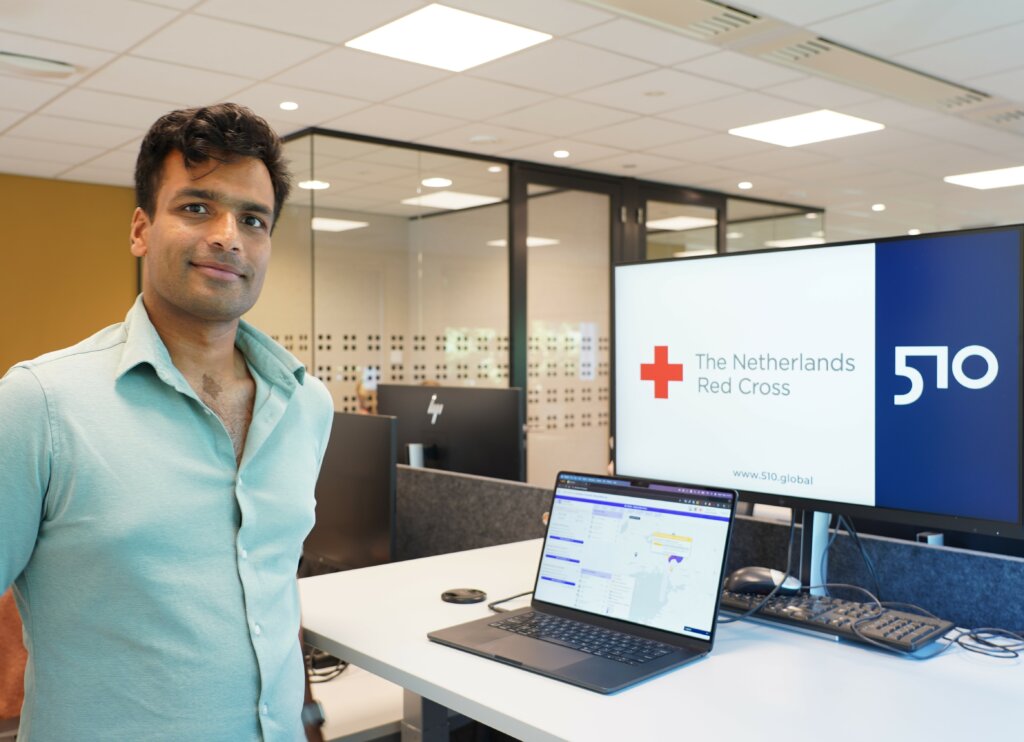
Au sein de l'équipe données et numérique de la Croix-Rouge néerlandaise, 510, nous sommes convaincus que derrière chaque innovation se cache une personne dont les compétences et la vision rendent l'action humanitaire plus rapide, plus intelligente et plus inclusive. Notre Personnes de 510 la série met en lumière ces individus : les parcours qui les ont amenés ici, les projets dont ils sont fiers et l'impact de leur travail dans le monde réel. Dans cette édition, nous rencontrons Gulfaraz Rahman, one of our software developers who turned a curiosity about tiny logos in browsers into a career of building impactful humanitarian tech.
Pouvez-vous nous parler de votre parcours et de la façon dont il vous a conduit chez 510 ?
At my first job as a software engineer, I noticed a huge gap between what they teach you in school and the actual work. I narrowed it down to a question: in Facebook (remember when that was a thing?), how does that tiny logo appear on your browser? One question led to another, and eventually I learned to build a web app. Then AI happened, and I tried understanding it the same way. That’s when I went back to university for a Master’s degree in AI. After eight years of working, going back to being a student was a big shift, and after graduating, I faced the same challenge: how does what you learn apply in real life? I started attending hackathons, including the Hackathon for Good in The Hague. Someone from 510 hosted a challenge there, which I solved. That led to a volunteer position, which introduced me to 510 where I now get to do the nerdy stuff I love.
Quel projet, produit ou service du 510 dont vous êtes particulièrement fier et pourquoi ?
It’s like picking a favourite child! I’ve worked on the Impact-Based Forecasting (IBF) Portal, the Helpful Information web-App (HIA), and the Automated Damage Assessment (ADA). Each solves a unique problem and impacts lives differently. The IBF Portal is an early warning system used by National Societies to release funds for anticipatory action. HIA started as a bulletin board for undocumented migrants in the Netherlands. Within a month after I built the first version, hundreds of users were on it. It’s now used in other contexts, like Ukraine. Finally, ADA detects damage to buildings, like schools and hospitals, using satellite imagery. ADA was the AI model I built as a result of that first hackathon, so I’m a little biased toward it being my favourite.
What challenges do you face when working with humanitarian data?
First, sometimes there are conflicts within datasets. I have to make educated estimates based on what’s available and when it was last updated. Sometimes there’s no information, or worse, wrong information. Second, access to data can be unreasonably difficult. It takes paperwork and trust-building to get what we need from organisations, and sometimes we get data way too late when timing is so important. Third – and this is the hardest – is that our data can have a delicate impact. Real people can be affected by my decisions. If I make a mistake, there are real consequences. But I’ve come to believe that not taking action usually leads to worse outcomes, and luckily, we have systems in place to reduce that risk.
Bien sûr, je peux partager un exemple. Il y a quelque temps, j'ai aidé un étudiant à rédiger un essai pour l'université. Nous avons travaillé ensemble pour organiser ses idées, peaufiner son argumentation et améliorer son style. Quelques semaines plus tard, il m'a contacté pour me dire qu'il avait reçu une excellente note pour son essai et qu'il avait été accepté dans le programme de son choix. J'ai été tellement touché de savoir que j'avais pu jouer un rôle dans la réussite de quelqu'un et l'aider à atteindre ses objectifs.
As a developer, I don’t interact with end users much. But I can see demand based on user numbers, which validates that what I built is useful. In terms of real-life impact, ADA was used to scan the damage after the Beirut explosion in 2020. It ended up being one of the earliest damage reports the humanitarian sector received. That was a full-circle moment after developing the model years prior. In another example, I recently spoke with staff at the Ethiopian Red Cross Society. They mentioned that 9,000 mosquito nets were distributed after we alerted them about a malaria outbreak via IBF. That detail stuck with me: if I hadn’t built the map that alerted the National Society, those nets might not have been distributed. Who knows how many lives that saved?
Qu'est-ce qui vous motive à continuer ce travail, même quand il est difficile ?
The work is meaningful. With an AI background, I could predict supermarket stock or train crowding. But here, a simple web app can make a lasting impact in people’s lives. And when it gets difficult, I lift my head and look around. I’m not alone. Our team is blessed with lovely humans. We’re all motivated people working towards a shared vision. We take care of each other and keep moving forward.
CLAUSE DE NON-RESPONSABILITÉ : Veuillez noter que les versions arabe, française et espagnole de cet article ont été générées automatiquement à l'aide de l'intelligence artificielle. Nous ne pouvons pas garantir l'exactitude de ces versions.
Nous voulons vous entendre !
Seriez-vous intéressé(e) par la mise en œuvre d'une solution similaire avec votre Société Nationale ou organisation humanitaire ? Veuillez contacter :
Product Manager, IBF Portal and ADA: Blaise Selvan bselvan@redcross.nl
Product Manager, HIA: Jonath Lijftogt jlijftogt@redcross.nl