Across Sierra Leone, communities restore degraded land to stay ahead of climate impacts. Led by the Sierra Leone Red Cross Society, the Tree Planting and Care programme spans 62 communities and has already supported the planting of more than three million trees. Over time, these trees stabilise soil, reduce flood risk and protect water sources. They also generate household income and food security – critical amid climate shocks increasingly affecting harvests and livelihoods.
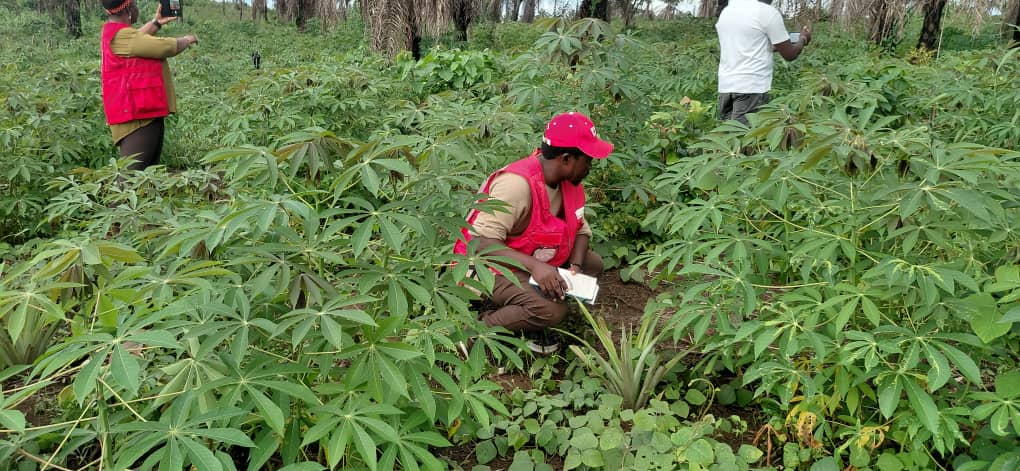
Because of the sheer scale of the programme, in-person activities are not enough to monitor the health and growth of the seedlings. This is where data comes in. The Sierra Leone Red Cross Society worked with the Netherlands Red Cross’ data & digital team, 510, to develop a digital tree health monitoring tool. Using remote sensing, the satellite-based tool tracks tree health, enabling targeted tree care and planting activities. This way, volunteers and community members can prioritise areas showing vegetation stress for targeted interventions.
Communities in the lead
Across the country, volunteers coordinate planting and care activities and maintain tree nurseries, ensuring young trees survive their most vulnerable stages. These community champions, guided by the Sierra Leone Red Cross Society, play a crucial role in sharing practical knowledge: when to plant, how to care for seedlings, and how to protect trees during dry spells or heavy rains. This local leadership is what gives the programme depth and durability: communities in the driving seat, actively managing risk in their own communities.
As the programme expanded, the Sierra Leone Red Cross Society needed to understand what is happening across dozens of communities without relying solely on time‑consuming field visits. Traditionally, problems such as poor growth or tree loss were often discovered only after impacts were already visible on the ground. Addressing this, the National Society enlisted 510’s assistance to explore how satellite data could complement local observations. The result? A tool that monitors tree health over time.
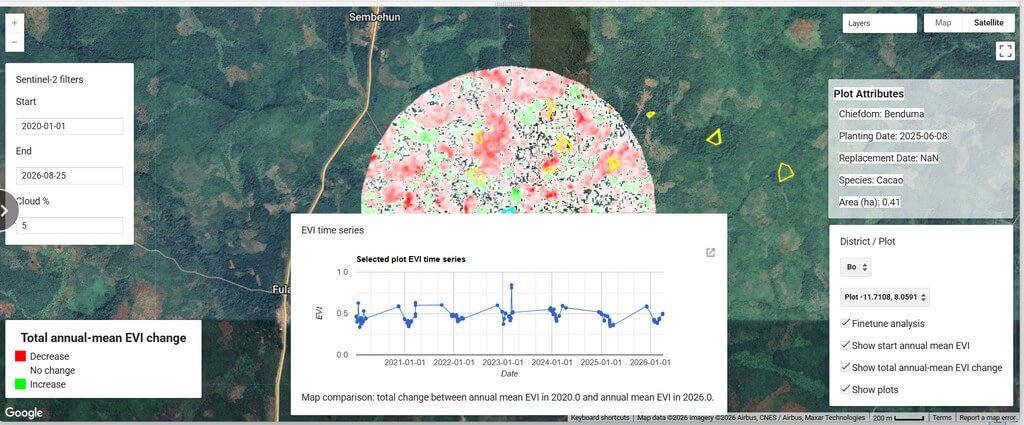
Seeing stress before it becomes a crisis
Using remote sensing data, programme teams can now spot early signs of vegetation stress. Declining vegetation health can be an early indicator of wider risk, including increased flood exposure or reduced agricultural productivity. For communities, these early signals can provide advance warning of drought conditions and potential food insecurity. With this information, communities can adapt farming practices by selecting more climate-resilient crops, improving water conservation measures, and adjusting planting schedules.
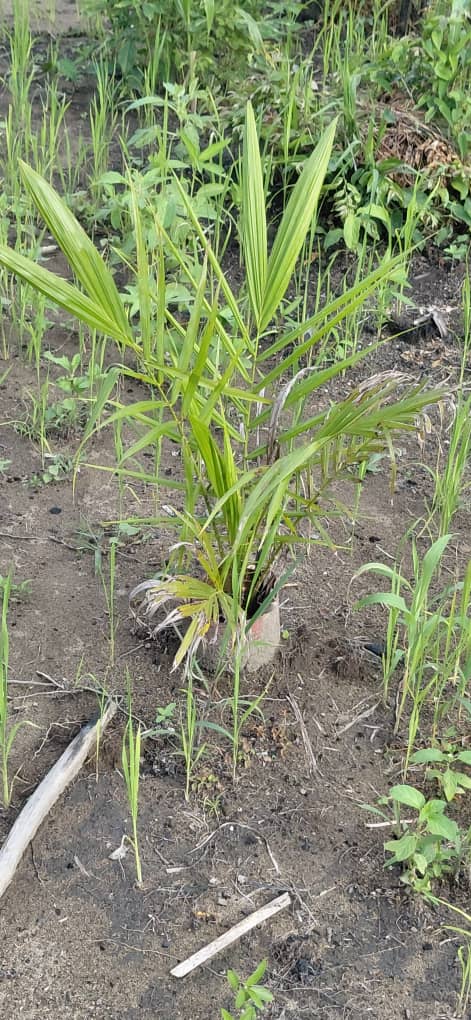
“Access to vegetation health data is helping us shift from reactive to proactive tree monitoring. We can identify areas showing early signs of stress, prioritise replanting where it is most needed, and track the impact of restoration efforts over time. This allows us to focus resources more effectively while reducing the need for time-consuming monitoring visits across dozens of communities.”
Yusufu Kamara, Director of Programmes and Operations at the Sierra Leone Red Cross Society
This data-forward approach gradually improves climate resilience over time, as it helps protect crops and livelihoods by guiding timely, localised action. Data, combined with rich local knowledge, helps communities and National Society teams make earlier, better‑informed decisions on where to plant, where to direct extra tree care, and how to adapt practices to changing conditions. In addition, the programme’s emphasis on planting fruit-bearing trees that provide both food security and sustainable income for communities strengthens long-term resilience to future climate shocks.
Strengthening National Society capacity through collaboration
The initiative is built on close collaboration across the Red Cross Red Crescent network. The Sierra Leone Red Cross Society leads implementation of the programme, supported by the Finnish Red Cross. The Icelandic Red Cross provides the funding that made this work possible. The Netherlands Red Cross, through 510, contributed data and digital expertise to support community‑led climate action.
“Climate resilience interventions have multi‑dimensions: they require environmental restoration, community ownership, technical and digital expertise, and sustained support. No single actor could typically provide all these dimensions alone. Throughout this collaboration, all partners brought together their own strengths to make sure that all multi‑dimensions are covered.”
Valeria Bacci, Country Representative of the Finnish Red Cross to the Sierra Leone Red Cross Society
The initiative has strengthened data-driven decision-making within the Sierra Leone Red Cross Society while supporting community-led climate action. More broadly, it shows how monitoring vegetation health data, accessible through simple tools, can help communities protect themselves, act earlier, and build resilience before climate shocks become crises.
DISCLAIMER: Please note that the Arabic, French and Spanish versions of this article were automatically generated using Artificial Intelligence. We cannot guarantee full accuracy of these versions.
We want to hear from you!
Curious about exploring simple, data-driven solutions to move forward your National Society’s anticipatory action work? Reach out to:
Data and Information Management Coordinator: Wessel de Jong wdejong@redcross.nl