When hurricanes loom over the Caribbean, national borders mean little. The same storm can sweep across multiple islands within hours, exposing countless communities to similar threats. This shared reality sparked an ambitious idea: what if three Caribbean island states could develop their hurricane Early Action Protocols (EAPs) together?
Together, the National Red Cross Societies of Antigua and Barbuda, Dominica and Saint Kitts and Nevis developed three nationally owned, simplified EAPs to help communities prepare for hurricanes before they strike. In collaboration with their respective meteorological agencies, the French Red Cross’ Regional Intervention Platform for the Americas and the Caribbean (PIRAC), le Croix-Rouge néerlandaise’ data and digital team, 510, and the International Federation of Red Cross and Red Crescent Societies (FICR), the three small island states embarked on a sub-regional initiative to build their anticipatory action capacities and reduce the impact of hurricanes on their territories. This process was made possible thanks to funding from the French Development Agency (AFD)’s Three Oceans programme and the European Union’s Horizon 2021 Research and Innovation Programme’s PARATUS projet.
Shared hurricane risk inspiring a shared approach
Antigua and Barbuda, Dominica, and Saint Kitts and Nevis all sit in one of the world’s most hurricane-prone regions. When a storm approaches, their National Societies need to act quickly, relying on strong community roots amid limited capacity – typical for small island states, where one person often manages several portfolios as a volunteer alongside a full-time job.
Following a sub-regional approach, partners from all three countries developed a model with common triggers and methodologies. Throughout the process, National Societies, technical partners and regional institutions worked side by side, driven by the opportunity to learn together.
“Developing the EAP with three Caribbean countries takes the pressure off an individual National Society, while offering support from others who understand your capacities and areas where you may need additional support.”
Victoria Charlton, EAP Officer at the Antigua & Barbuda Red Cross
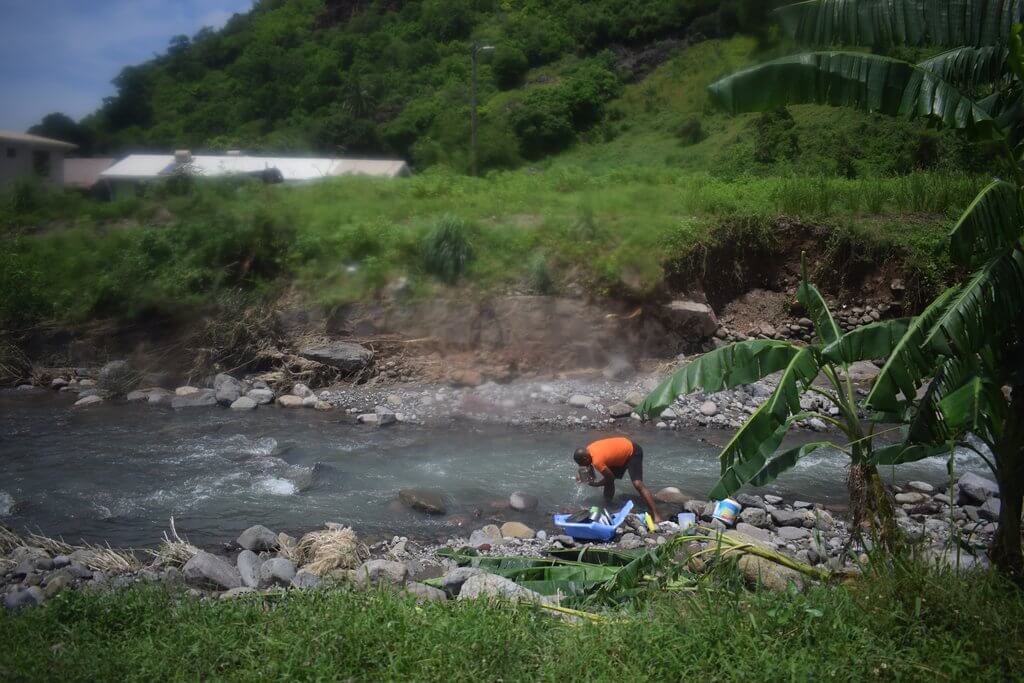
One hurricane, three different realities
“We used to focus on helping vulnerable people after a disaster’s impact. Anticipatory action now allows support to arrive earlier, giving communities the means to prepare in a dignified manner.”
Brian Dyer, Director of the Nevis Disaster Management Agency
When forecasts indicate danger, difficult decisions need to be made quickly. Which actions are feasible within the available timeframe? Which households should receive support? How much funding is required? And which actions can be standardised across countries?
While all three National Societies identified common actions such as distributing hygiene kits, preparing shelters and supporting vulnerable households, each country also faced distinct needs. In some communities, action needs to focus strongly on accessibility and supporting people with disabilities. In others, protecting livelihoods such as fishing and agriculture is of greater priority. The challenge was deciding which parts of the protocol could be shared, and which needed to remain unique to each country.
“We can all agree on certain things that are common about us, but this work still allows us the flexibility to cater to the needs of our population.”
Cheslin Maloney, EAP Officer at the Saint Kitts & Nevis Red Cross Society
The vision was a single sub-regional EAP covering all three countries. But in practice, what happens if a hurricane makes landfall on one island but not another? Or when all three countries require different levels of support at the same time? In response to these challenges, partners shifted toward developing three simplified national EAPs while retaining the collaborative process and technical elements.
“The main challenge was balancing a common process with the realities of the three National Societies, while coordinating stakeholders with different roles and preserving their autonomy. With no existing model for this new sub-regional approach, we had to build and adapt the process together, learning as we went.”
Jérémy Mouton, Emergency Preparedness & Response Deputy Coordinator at PIRAC
This learning opportunity, alongside similar regional initiatives, is now feeding into broader conversations on how to make anticipatory action mechanisms more accessible for smaller National Societies.
When to activate an EAP
All three countries rely heavily on forecasting information from the National Hurricane Center, supported by national and regional meteorological services. Turning hurricane forecasts into early action required translating complex forecasting information into a system that could quickly support real-world decisions.
“The communication aspect is most important. We are translating probabilities and other elements of the storm into statements that persons can use to take action.”
Dale Destin, Director of the Antigua & Barbuda Meteorological Service
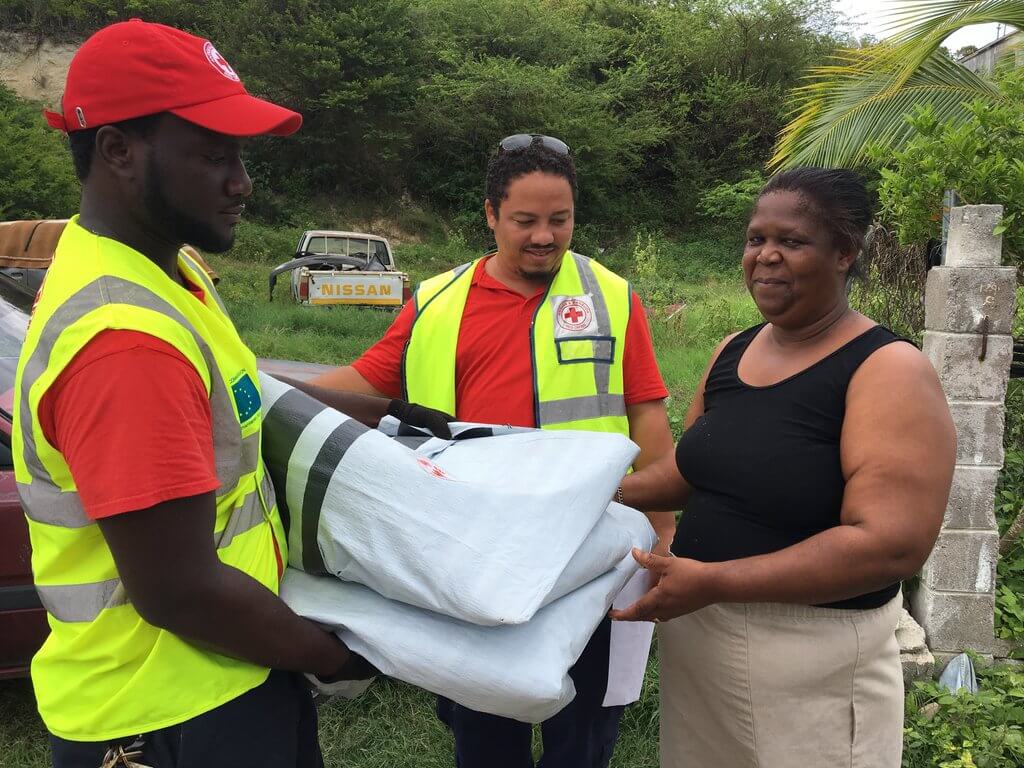
Putting plans to the test
For months, partners had discussed triggers, budgets and responsibilities. Finally, a simulation exercise offered a chance to see whether those plans would actually work, testing decisions and operational procedures under pressure. The exercise helped refine preparedness actions and clarify coordination requirements with partners.
“The simulation helped National Societies take a realistic view of their capacities. Several activities were revised once teams realised they would be difficult to implement within a limited lead time.”
Aklilu Teklesadik, Service Coordinator Anticipatory Action at 510
And for many participants, the workshop made the realities attached to the EAP tangible.
“Today it got serious because I realized that I might be in charge of managing some of the coordination. The responsibility became more concrete.”
Cheslin Maloney, EAP Officer at the Saint Kitts & Nevis Red Cross Society
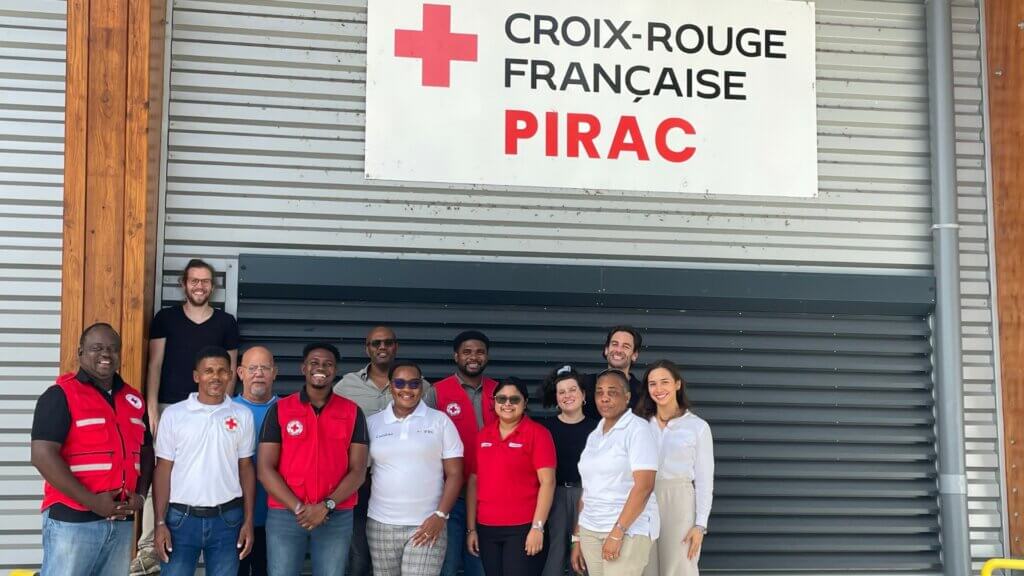
Building an anticipatory action community in the Caribbean
Over time, teams began discussing how they could support each other long after the EAPs were completed.
“We are different islands, but we are similar in many ways. Through our new connections, we now train volunteers together, including in sign language, so they are better able to respond.”
Jocelyn Pearl Robin, EAP Officer at the Dominica Red Cross Society
For Caribbean humanitarian organisations that often operate with small teams and limited resources, these connections may prove just as valuable as the EAPs themselves.
“In the Caribbean, we need to protect each other. An anticipatory action community can help us shift from responding individually to anticipating collectively, leveraging peer-to-peer support and regional knowledge to act earlier and more effectively.”
Shivanie Mahase, Programme Officer at IFRC Country Cluster Delegation for the Dutch and English-speaking Caribbean
Quelle est la suite ?
The three EAPs are now approaching completion. Once approved, they will provide National Societies with pre-agreed procedures and access to financing that allows action before a hurricane strikes, creating clearer pathways from forecast to action.
“Success looks like strong coordination, timely access to funds and resources, and a documented learning process so that other regions can apply these lessons in their own contexts.”
Rebeca Munoz, Senior Officer Anticipatory Action and Community Resilience at IFRC Americas
By testing a sub-regional approach and documenting both its opportunities and limitations, practical lessons can be drawn for other small island states facing similar challenges. As climate risks increase, these lessons may help shape the next generation of collaborative humanitarian action in the Caribbean and beyond.
Want to know more? Get in touch with
EAP Officer, Antigua and Barbuda Red Cross: Victoria Charlton abredcross@abrcs.org
EAP Officer, Dominica Red Cross Society: Jocelyn Pearl Robin eapofficer.dom@gmail.com
EAP Officer, Saint Kitts and Nevis Red Cross Society: Cheslin Maloney cheslin.maloney@gmail.com
Service Coordinator Anticipatory Action, 510: Aklilu Teklesadik ateklesadik@redcross.nl
Emergency Preparedness & Response Deputy Coordinator, PIRAC: Jérémy Mouton jeremy.mouton@croix-rouge.fr