Header image: Corina during a digital solutions in Disaster Management workshop in Mali with Souleymane Konate (Mali Red Cross) and Mélanie Drooglever-Fortuyn (Netherlands Red Cross) 2024. © The Netherlands Red Cross
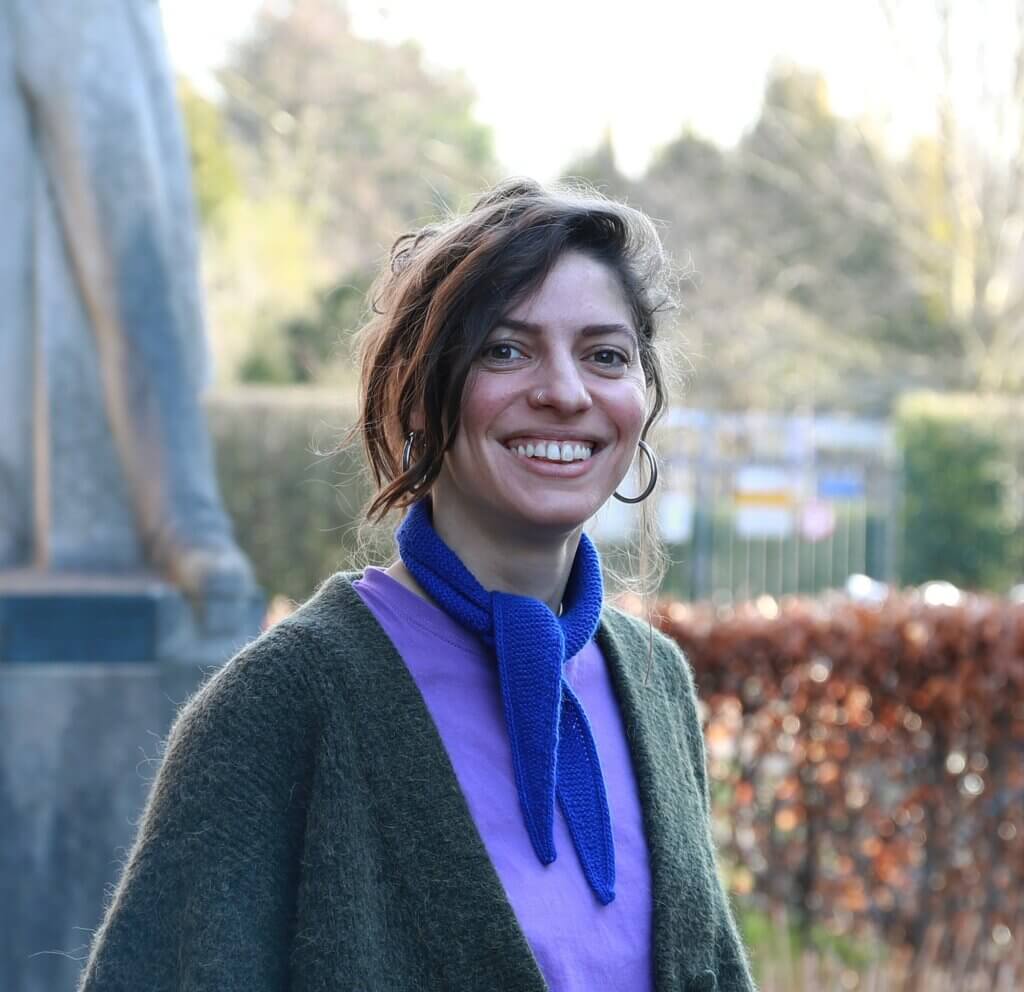
This International Women’s Day, we celebrate the extraordinary women* across the Red Cross Red Crescent Movement who help make this world a better place. Our Technical Project Coordinator for Acción Anticipatoria, Corina Markodimitraki, is one of the leading women in our Netherlands Red Cross’ 510 team, working hard to ensure that data and digital support reaches communities before disaster strikes. We sat down with Corina for a conversation about her path so far, and how we can affect more inclusive practices at the intersection of humanitarian assistance and data and digital work.
When did you first join the Netherlands Red Cross, and what drew you to it?
I joined in December 2020, after defending my PhD in biology. Ever since I was a kid, I was very passionate about social and environmental causes. I even have diary entries from my childhood that say, “I want to protect the environment”! After my PhD, I started looking for concrete ways to contribute while searching for a job. A friend I climb with told me about 510. I called him to learn more, signed up as a volunteer with the team, and the rest is history.
How did your path into data and digital work begin? Was it a straight line, or a series of unexpected turns?
It was not at all a straight line. Having studied biology, I never imagined that I would end up at the Netherlands Red Cross. But I’ve always been a little nerdy and interested in doing things more efficiently. Volunteering with 510 led to a three-month consultancy role. This was a big risk at the time, as I had just been offered a job to teach biology at a university. Yet, against my family’s advice, I chose the consultancy, which soon turned into a staff role as Volunteer Manager. This was a huge shift from my academic background. Suddenly, my work became very people-focused. I realized that there were many opportunities to strengthen how our team works – with volunteers, and in how we approach diversity and inclusion. A project with the Hellenic Red Cross took me to Athens, and showed me how important it is to involve the people for whom we design and build the tools. This experience opened my eyes to agile software development and human-centred design, and ultimately translated into my current role as Technical Project Coordinator. Over time, I understood how much I enjoy identifying a problem, collaborating with users, and building technical solutions step by step. I came into 510 with an open heart – and with supportive team leads, it turns out going with the flow and trusting your gut works pretty well.
What major crises, operations or projects have shaped you, and what role did data or digital tools play?
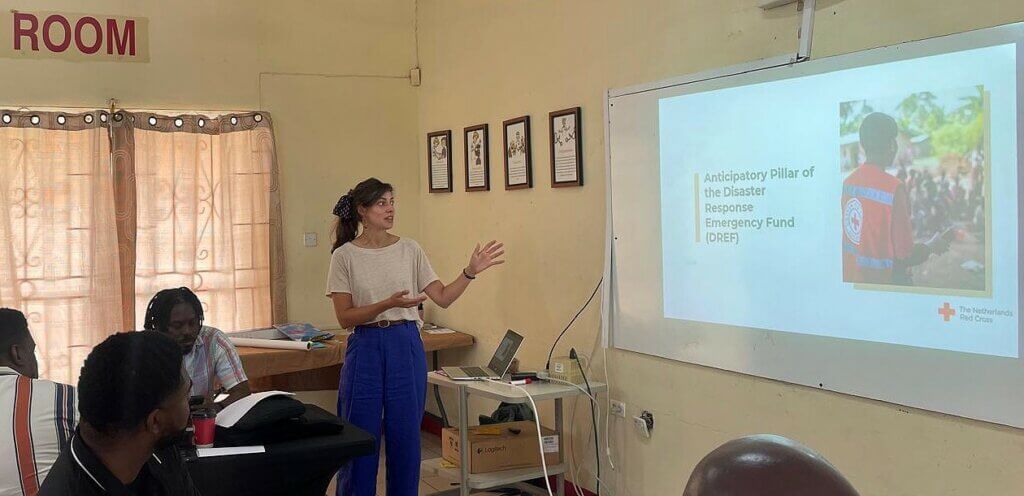
A defining moment for me was visiting the Mali Red Cross. That trip gave me a clearer understanding of how we could engage with partner National Societies in a more open and exploratory way within anticipatory action. By mapping data flows, the Mali Red Cross identified several opportunities to improve the efficiency, speed and collaborative nature of its disaster management activities. Similar conversations with the South Sudan Red Cross and Zambia Red Cross Society revealed the same gap. This shaped my work today: supporting National Societies in building user‑friendly, practical tools to inform disaster management activities. This way, we can support National Societies by strengthening the Information Management systems that help them act quickly and effectively.
Where do you see power imbalances in humanitarian data work, and how do you help shift them?
Local branches of National Societies are often left out of conversations, with decisions made mostly at headquarters. Our responsibility is to bring branches to the table from the start, to understand how they work, what challenges they face – and to ensure the tools we build also meet their needs. Protection, Gender and Inclusion (PGI) is crucial here too. While building a health case management system with the Hellenic Red Cross, for example, we were very intentional about language, design, and how sensitive information should be displayed and accessed. People visiting health points, including many migrants, could face discrimination, so the way medical conditions were phrased and data was visualised had to be inclusive and respectful. Following data responsibility principles, we designed the system to ensure only authorised staff could access specific information, keeping patients safe.
What changes can organizations make to better support underrepresented groups in the workplace?
Hiring processes need to become less biased. A few years ago, I looked at 510’s diversity and inclusion practices and helped develop recommendations to make recruitment more accessible. Research shows that women and other underrepresented groups often hesitate to apply unless they meet all requirements. So, we revisited our job descriptions, focusing on actual tasks rather than long lists of degrees or years of experience, to open doors to a wider range of applicants. But inclusion doesn’t stop with hiring a diverse group: team dynamics matter just as much. In our Anticipatory Action team, we run regular, anonymous temperature checks so colleagues can safely express how they feel speaking up in meetings. Inclusion also needs to run across all levels of seniority. Our team leads work consciously to create space for all team members to thrive and to be mindful of power dynamics. This isn’t only about gender, but any factors that could produce power imbalances. We want to make sure that all staff, regardless of seniority, feel safe, heard, and supported.
Is there an anecdote you’d like to share?
Once, while visiting a National Society, someone from the IT department addressed me as “little girl”. I replied, kindly but clearly: “My name is Corina. But if you prefer, you can call me Dr. Markodimitraki”. He never said it again. I know he didn’t mean any harm, but language matters. How we respond to situations like this depends on context – in this case I used humour – but the responsibility to protect staff and hold people accountable lies with organisations and leaders.
*At 510, we work with an inclusive definition of women as all adults who live and identify as women though they may not have been assigned female at birth. Discrimination, harassment, or systemic barriers to success are not experienced by all women equally. International Women’s Day is a time to recognize the unique, disproportionate and intersecting challenges faced by women of colour, women with disabilities, and queer or trans women, and to stand in solidarity with them. To learn more, visit the International Women’s Day website.
DESCARGO DE RESPONSABILIDAD: Tenga en cuenta que las versiones en árabe, francés y español de este artículo se han generado automáticamente mediante Inteligencia Artificial. No podemos garantizar la total exactitud de estas versiones.
Queremos conocer su opinión.
Are you interested in hearing more about anticipatory action as a practice in the humanitarian sector? Please reach out to:
Coordinador de servicios, Acción Anticipatoria: Aklilu Teklesadik ateklesadik@redcross.nl