Imagine you’re a humanitarian worker in the Democratic Republic of the Congo (DRC). You’re tasked with delivering life-saving cash support to families in crisis. The roads are rough, flooding and dangerous wildlife are common, and armed groups operate nearby. Yet, you show up every day, determined to reach the families who depend on crucial assistance.
Now, envision a different scenario: from your office, you can remotely support field teams in the most hard-to-reach areas, triggering safe cash transfers with just a few clicks.
This scenario is already a reality for several humanitarian partners in the DRC and beyond, thanks to the منصة 121. Developed by the Netherlands Red Cross’ data and digital team, 510, the 121 Platform enables organisations to deliver cash assistance easily, safely, and at scale, especially in a country where insecurity, natural hazards, and enormous distances make traditional assistance extremely challenging.
One country, different contexts, same digital modality
The DRC is vast, diverse, and difficult to navigate. In the conflict-affected Kivu region, Help a Child, part of the Dutch Relief Alliance, has implemented three digital cash programmes since 2021, reaching nearly 3,700 people with mobile money. Each participant receives a SIM card linked to a mobile money wallet, plus guidance on how to use it safely. Payments are delivered through Vodacom, allowing families to withdraw cash via local agents.
Further west, the Red Cross of the Democratic Republic of the Congo (DRC Red Cross) and the Belgian Red Cross use a similar model in Kenge and Kikwit, supporting nearly 2,000 people affected by floods, population movement and intercommunal tensions across four localities. Despite operating in different regions and responding to different crises, both organisations rely on the same digital workflow: KoboToolbox for registration, 121 for programme management, and mobile money operators for disbursements.
To ensure equal access, the model assumes not everyone owns a phone. Organisations therefore distribute SIM cards and provide clear instructions, reducing barriers and ensuring smooth tracking. Once numbers are linked to the 121 Platform, payments can be sent remotely without dangerous travel or handling physical cash – a game changer in regions with volatile security.
Digital payments made even faster: integration with Onafriq
Since September 2025, the 121 Platform has been fully integrated with Onafriq, a payment aggregator operating across Africa. This integration allows payments to be executed through various mobile money providers from a single Onafriq wallet. This shift has replaced slower, fragmented manual processes with one streamlined, high-speed system, delivering cash to people instantly and greatly reducing administrative workload. For teams stretched across vast distances, this integration felt like a breakthrough.
Fast learning, strong results
Help a Child recently used the 121 Platform to deliver mobile money to 2,400 people displaced by conflict, managed by just four programme team members – demonstrating how a small team can run a large programme fully digitally.
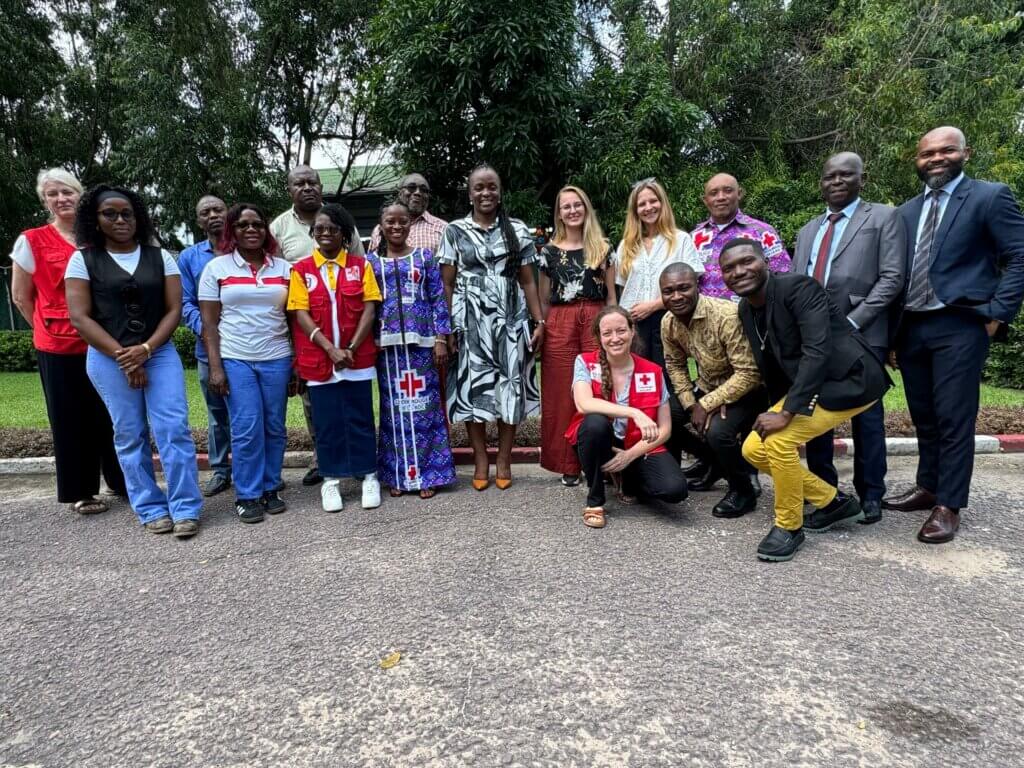
Meanwhile, the DRC Red Cross, supported by the Belgian Red Cross, achieved a major milestone shortly after adopting 121: 500 people registered, SIM cards distributed, and payments completed – all within one month! Most volunteers in Kenge and Kikwit were new to digital tools, yet after a single training by the 510 team, they were already navigating 121 confidently to track payment status and update people affected.
“The integration with Onafriq significantly accelerated the transfer of payments. Real-time traceability allows teams to act immediately on failed payments, creating a truly collaborative and transparent payment management process and speeding it up.”
Christine Grégoire, CVA Focal Point at the Belgian Red Cross
Scaling digital in challenging environments
2025 has been Help a Child’s most active year of 121-powered digital cash. The organisation is now training other Dutch Relief Alliance members to adopt similar workflows. Seeing other organisations adopt digital cash has strengthened a sense of community among teams who share the same mission. The DRC Red Cross and Belgian Red Cross are also strengthening digital capacity across multiple branches, moving toward a harmonised countrywide approach to mobile money payments.
The integration with Onafriq helps future-proof this system by increasing flexibility, speeding up disbursements, and reducing workload – all without disrupting existing workflows.
Why digital cash matters in the DRC
In a country as large and complex as the DRC, traditional assistance delivery is often slow, risky, and expensive. Digital cash offers a safer, faster and more scalable alternative:
- Remote payments reduce security risks
- Faster disbursements allow families to meet needs sooner
- Centralised systems enable support multiple regions simultaneously
- Real-time visibility improves coordination and accountability
In the DRC, challenges won’t disappear overnight: the roads will still flood, and distances will remain vast. But when support can keep up with the storm, families stand a better chance. And that is exactly what digital cash makes possible.
تنصل: يرجى ملاحظة أن النسخ العربية والفرنسية والإسبانية من هذه المقالة تم إنشاؤها تلقائيًا باستخدام الذكاء الاصطناعي. لا يمكننا ضمان الدقة الكاملة لهذه النسخ.
نريد أن نسمع منك!
121 is designed for organizations like yours: easy, safe, fast, and built for scale. From Sudan إلى أثيوبيا، ال هولندا إلى Slovakia: throughout 2025, we supported 18 National Societies and organisations with the 121 Platform. Be part of this growing network of 121 champions, and contact us to learn how we can support your next programme: support@121.global